
Utah Legislature Passes Bill To Allow Medical Use of Shrooms, MDMA

The Utah Senate and House unanimously approved a bill that would establish a pilot program for hospitals to administer psilocybin and MDMA as alternative treatment, sending it to the governor.

A bill introduced by Senate Majority Whip Kirk Cullimore (R) and House Speaker Pro Tempore James Dunnigan (R), earlier this month, Senate Bill 266, would create a pilot program to explore psilocybin and MDMA as alternative treatments in hospitals in Utah.

The bill was sent to the desk of Utah Gov. Spencer Cox (R) this week where it awaits his signature. Since hospitals and universities generally default to federal regulations, it’s unclear how the bill would pan out as psilocybin and MDMA remain schedule I drugs under the Controlled Substances Act (CSA).

“The bill is proposing, really, an alternate pathway, ” Rep. Raymond Ward (R) said before the House vote this month. “That’s why I say it’s a philosophical question. Do you think that these medicines really only should always just go through this one pathway, the FDA first and then be allowed to be used? Or do you think there should be any other alternate pathway whereby a patient might be given these medications in a controlled setting from some of our best physicians, but where we really do not yet have all of the data that we normally would have before we gave them to patients?”

Per the bill, psilocybin and MDMA would be administered by a privately owned, non-profit health care system with at least 15 licensed hospitals, or as part of medical programs operated by higher level institutions of learning.

“A healthcare system may develop a behavioral health treatment program that includes a treatment” with psilocybin and MDMA that it “determines is supported by a broad collection of scientific and medical research,” the bill reads.

Utah SB 0266 passed almost unanimously, thanks to the tireless efforts of Utah Patients Coalition and Libertas.Soon there will be be pilot programs for clinical MDMA and psilocybin via IHC and U of U health. finally, some tangible mental health progress from the #utleg 1/3— Michael ???? (@mcmorrise) March 7, 2024

The bill would amend Laws of Utah 2023, Chapter 303, and enact 58-37-3.5, Utah Code Annotated 1953. Utah voters approved medical cannabis in 2018, and the state is well on its way towards amending laws surrounding psychedelics for therapeutic purposes.

Any hospital that participates in the psychedelics therapy pilot program would need to submit a report to the Utah Legislature by July 1, 2026, detailing which drugs are being utilized, the outcomes of patients in treating their conditions, and any potential side effects.

If passed, the bill would take effect on May 1, 2024 and sunset after three years.

Two years ago, Gov. Spencer Cox (R) signed into law a bill that created a task force to study and make recommendations on the therapeutic potential of psychedelic drugs and possible regulations for their lawful use.

Rep. Brady Brammer (R), who sponsored the previously enacted psychedelics task force legislation, House Bill 167, said psychedelics represent “one of the few areas of research where we see that there are curative possibilities for mental health, particularly related to PTSD and treatment-resistant depression.”

“This is another tool in our toolbox,” he said. “We’ve done the task force. They’ve come back with their reports. And now we have this clinical trial of sorts that allows for some of the patients to get it under significant observation with the appropriate guardrails.”

Mormons on Mushrooms? A Growing Interest in Psilocybin in Utah

Meanwhile, last November in Provo—a city with nearly 90% of residents who are Mormon, or Latter-Day Saints—a mushroom treatment center, called Singularism, opened its doors.

Singularism touted freedom of religion in order to use psilocybin mushrooms but immediately attracted the wrath of the City of Provo, whose officials appeared to state that the center wouldn’t last long.

A longshot bill that would legalize psilocybin mushrooms in Utah was introduced last February. Senate Minority Leader Luz Escamilla, (D-Salt Lake City) unveiled Senate Bill 200 on Feb. 9, a bill that would legalize psilocybin mushrooms for medical use in Utah.

Deseret News reports that SB 200 would set up a program that mirrors the program behind Utah’s medical cannabis market. Utah’s compromise bill, the Utah Medical Cannabis Act, which was passed in 2018 allows patients with a healthcare provider’s verification, to purchase medical cannabis.

The bill would allow Utahns ages 21 and older to receive a psilocybin-assisted treatment directly from a psilocybin therapy provider. Qualifying conditions would include depression or anxiety if the patient has tried at least one other treatment route, PTSD, and people who are receiving hospice care.

Currently in Utah, possession of psilocybin can result in a prison sentence of up to 10 years or a $5,000 in fine. The state has come a long way in terms of cannabis and psychedelic reform, with a Mormon supermajority that has dominated its legislature for decades.
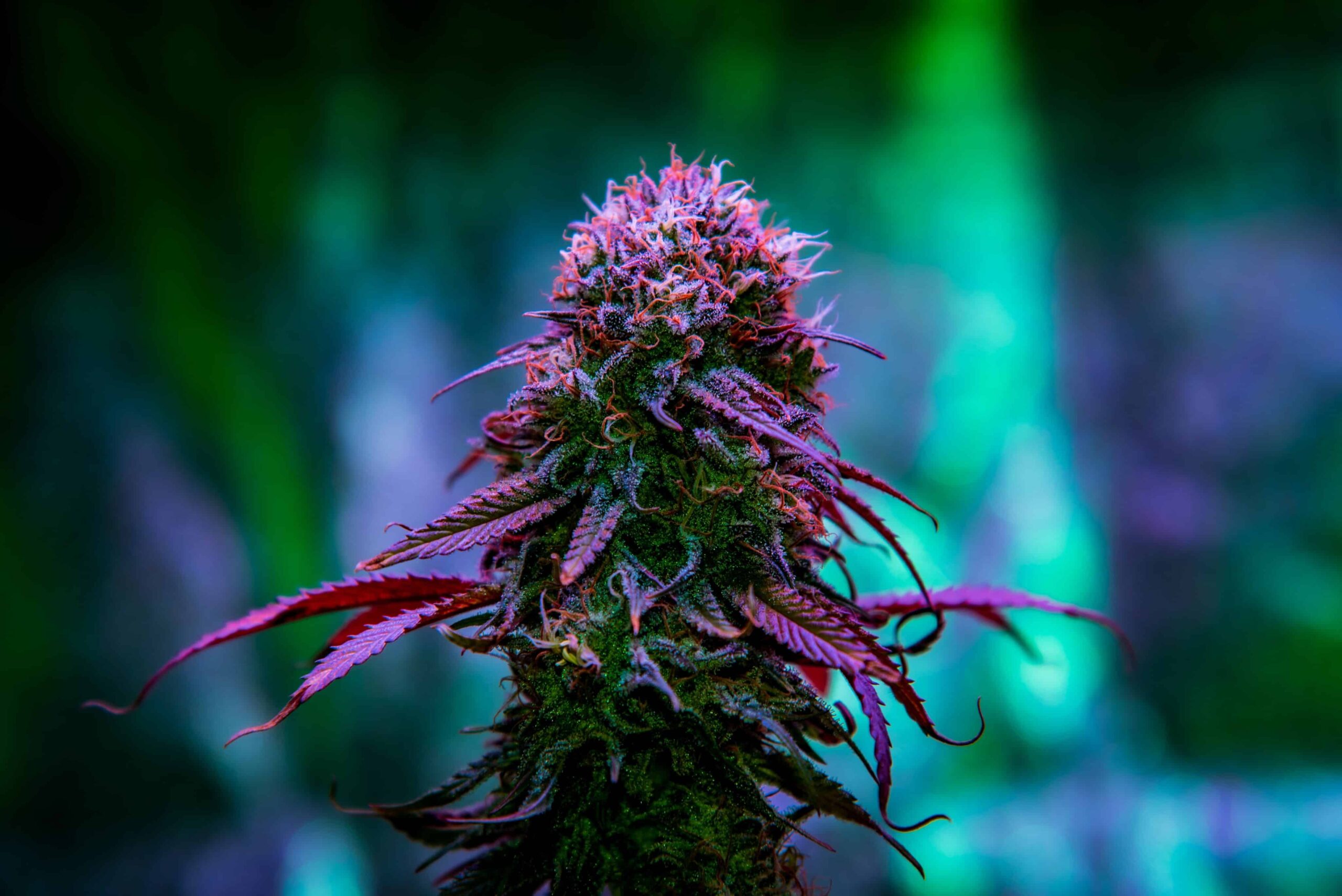
Minnesota To Crack Down on Illegal Flower Sales, Including Full-Strength Hemp

Minnesota’s Office of Cannabis Management (OCM) announced Tuesday that it will begin to crack down on the illegal sales of cannabis flower across Minnesota as the state’s adult-use market takes form. The Star-Tribune reports that the OCM entered into an agreement with the Minnesota Department of Health (MDH) to add inspection capacity for illegal sales of cannabis flower.

Minnesota is the 23rd state in the nation to legalize adult-use cannabis for people 21 and older. In doing so, the state also legalized the sale of hemp-derived cannabinoid consumer products, a unique provision, but selling raw cannabis flower is currently illegal because OCM has not yet issued any cannabis business licenses, and hemp sellers must also be licensed. 

When Minnesota legalized adult-use cannabis, the Minnesota Legislature included statutory provisions, Minnesota Statutes, chapter 152.0264, making the sale of cannabis illegal until a business is licensed by OCM.

As seen in many other states, many retailers have taken advantage of the legal loopholes regarding hemp derivatives, but the state is pushing back against unlicensed businesses. Just a week ago, on March 7, the OCM issued an enforcement notice designed to warn retailers about selling full-strength hemp products. The OCM stated that it has received complaints of retailers selling full-strength cannabis flower under the guise of being hemp. Hemp is legal only within THC limits specified by state and federal law.

The OCM, in alignment with federal law regarding hemp under 7 CFR 990.1, will consider the total concentration of THC post-decarboxylation—the process that converts THCA to delta-9 THC to produce an intoxicating effect. The examination of raw flower products will include reviewing the certificate of analysis.

Minnesota Statutes, Chapter 342 defines Minnesota’s cannabis market, empowering the OCM to ensure compliance. Minnesota Statutes, chapter 342.09, subdivision 4 prohibits the retail sale of cannabis flower and cannabis products “without a license issued under this chapter that authorizes the sale.”

A Warning to Flower Sellers in Minnesota

The OCM reiterated its stance on flower that is being sold by retailers without a license.

“Our primary goal at the Office of Cannabis Management is to ensure a safe, legal cannabis industry that protects public health and provides accurate, reliable information to adult consumers,” said Charlene Briner, OCM interim director. “This interagency agreement gives us capacity to conduct inspections during this transitional implementation period, and more fully integrates the work of the MDH inspectors who will eventually transition their work to OCM.”

MDH inspectors who inspect retailers selling legal hemp-derived cannabinoid products will begin simultaneous examination of w flower products being offered for sale to ensure those products are hemp and not cannabis.

“While this is a temporary issue that will no longer exist once businesses are licensed to sell cannabis flower, OCM’s commitment to ensuring an industry that abides by all legal requirements is steadfast and ongoing,” said Briner. “We are confident that by providing clear expectations and guidance to businesses, the majority of operators will choose to follow the law.”

The crackdown of raw flower products will mean that inspectors will look for the product’s certificate of analysis for test results on total THC. Per federal law and under the 2018 Farm Bill, hemp flower must contain 0.3% or less of delta-9 THC on a dry weight basis. Products exceeding 0.3% delta-9 THC in dry weight are considered marijuana and are therefore illegal to sell.

Penalties for Selling Flower Illegally

So what are the penalties involved for sellers of illegal flower? Retailers caught selling flower and who are in violation of the law could be faced with embargo of product and fines of up to $1 million for violating state law. Additionally, a violation could impact a person’s ability to receive a license for a cannabis business in the future. 

Per Minnesota Statutes, 342.09, subdivision 6, OCM may assess fines in excess of $1 million for violations of this law. Likewise, under Minnesota Statutes, chapter 342.19, OCM is empowered to embargo any product that it has “probable cause to believe . . . is being distributed in violation of this chapter or rules adopted under this chapter[.]”

The OCM encourages retailers to vet products that they are selling to ensure that the products are legal. The OCM has sent a letter to all retailers registered with MDH to alert them that inspections of raw flower will begin immediately.

In a December 2023 bulletin, Minnesota’s health department issued a similar warning, noting that the agency inspected 167 retailers offering hemp-derived cannabinoid products between August and November and found that more than one in three (39%) of the shops were selling illegal high-potency products. Under Minnesota law, hemp edibles and beverages sold in the state must not exceed 5 milligrams of THC per serving and no more than 50 milligrams per package.

Licensing for cannabis retailers is expected to roll out later this year, and state officials aim to launch cannabis sales in 2025.