Yes, Hip-Hop Will Survive Without TikTok
Cop Your XXL Merch NowLast September, TikTok announced it had collaborated with Billboard to launch its first-ever Top 50 Chart, and Sexyy Red had debuted at No. 1. The announcement confirmed what many saw as inevitable: TikTok was taking over the music industry. Prior to the Billboard TikTok 50 chart, songs from rappers were blowing up on the app, leading to chart domination. Now, as the U.S. House of Representatives gives the Chinese-based app six months to find a U.S. buyer or face stateside exile, it remains to be seen what impact this will have on the music industry as a whole. The conversation around whether or not it will affect hip-hop is ongoing, especially rappers who rely on the platform to share their music. Will hip-hop survive without TikTok if it gets banned? Of course it will.When Billboard debuted its TikTok Billboard Top 50 in 2023, rap was having far from a stellar year on the more traditional Billboard charts. The first rap-related entry on the Billboard 200 was Lil Uzi Vert’s Pink Tape last July, followed by Jungkook’s song “Seven” featuring Latto that hit No. 1 on the Hot 100 in the same month. Doja Cat’s “Paint The Town Red” emerged as the first solo No. 1 rap track of the year, but didn’t hit that spot until September. Meanwhile, on the app, the genre was actually thriving.Rappers Take Over Billboard TikTok ChartSexyy Redd claimed the first-ever No. 1 spot on the TikTok Billboard Top 50 chart with her smash hit “SkeeYee.” Doja followed close behind at No. 2 with “Paint The Town Red.” Sexyy also appeared two more times in the top 50, with her songs “Looking For The H*es (Ain’t My Fault)” and “Mad At Me” debuting at No. 19 and No. 50, respectively.Elsewhere, Ice Spice’s “Deli” and NLE Choppa’s “It’s Getting Hot” also debuted in the chart’s top 10 and No. 6 and No. 8. While Charlie Wilson’s “I’m Blessed” featuring T.I. additionally debuted at No. 9, Young Thug and Drake’s “Oh U Went” debuted at No. 14 and Young Nudy’s “Peaches & Eggplant” featuring 21 Savage debuted at No. 16. Gunna, Tee Grizzley, Kaliiii, Toosii, Megan Thee Stallion, Nicki Minaj and J. Cole also debuted within the top 50.That trend has so far continued into March of 2024. Kanye West and Ty Dolla $ign’s “Carnival” comfortably sits at No. 1, 21 Savage’s “Redrum” is at No. 8, Bossman Dlow’s “Get In With Me” is at No. 10. Elsewhere, Jack Harlow, Flo Milli, Rich Amiri, Dej Loaf, G-Eazy and 4Batz are just a few of the rappers scattered throughout the top 50.Read More: Sexyy Red Admits She’s Shocked By Her SuccessTikTok’s Relationship With Hip-HopIt’s impossible to ignore TikTok’s star-making power, as the app has kickstarted the careers of dozens of rappers such as Sexyy Red, Lil Nas X and Armani White. There are a few reasons for this, one of which is that a 2021 study by MRC Data showed 64 percent of the reported app’s user base were teenagers, who historically have always been more hungry for new trendy music than adults. Additionally, a behavioral poll conducted by Midia Research in 2021 showed that 40 percent of active TikTok users had a monthly paid subscription service for music, compared to just 25 percent of the general population. This means it was much more likely for a TikTok fan to switch to their streaming platform of choice and stream a new track discovered on the app.But as time has gone on, artists have criticized major labels for funneling TikTok’s star power to their clients and choking off indie success.”If a song is going viral on TikTok, and the artist is unsigned, and as a result, it’s getting a million streams on Spotify, the labels are scrambling to sign that song or that artist,” Tatiana Cirisano, a music industry analyst and consultant at Midia Research, told CNBC in 2022. “They’re obsessed with expanding their market share and making sure they don’t lose any market share to independent artists.”TikTok is also showing that it may not know how to compensate artists reliant on their platform. Universal Music Group pulled the plug on TikTok in January, and said it would remove its signees’ music from the app entirely in part because of “how little TikTok compensates artists and songwriters.” The label’s roster includes Drake, Nicki Minaj, The Weeknd and many other of the biggest artists in the world. In an open letter, UMG said, “Ultimately TikTok is trying to build a music-based business, without paying fair value for the music.”Would a TikTok Ban Hurt Hip-Hop?So, would a TikTok cancelation be detrimental to rap? Considering the messy stumbles mentioned above, all signs at this moment point to no. Not to mention the correlation between rap’s dominance on TikTok versus its tepid presence on the Billboard charts is in line with the genre’s history. Trendsetting is in hip-hop’s blood, dating back to when New York’s word-of-mouth “block parties” of the 1970s kickstarted the genre. So, it makes sense that in 2024, the place to find the hottest hip-hop records isn’t always on the charts or TikTok. It’s on streaming platforms, many other apps, internet message boards, YouTube, in the streets, on the radio and by good old word of mouth.While sifting through TikTok can’t remotely be compared to crate-digging through a pile of records, the point is that rap will always be whereever the kids are. Regardless of where that is, even without TikTok, wherever the kids go next, rap will be sure to follow.Not to mention, the artists don’t appear to be stressing that much, since there are so many avenues for them to get their music out. Coi Leray, whose song “No More Parties” earned a big surge in popularity in 2022 thanks to TikTok, knows the benefits of the platform. It’s benefitted her career significantly. However, it doesn’t make or break her as a artist.”Tiktok is not a streaming platform,” Coi tweeted on March 13. “And I never looked at it as one. I’m not worried. As long as you don’t take away Apple Music, Spotify, Soundcloud, Tidal, Audio Mac, YouTube music, Amazon music, I’m good. Music and the love I have for it, is forever.”Can’t argue with that.Read More: Drake’s Serious Devotion to Sexyy Red Is Costing Him Big BucksCop Your XXL Merch NowSee How Much It Costs for a Verse From Your Favorite RapperAny guesses on dollar amounts before you look?
Benzino Makes Wild Accusation That Eminem Got Plastic Surgery

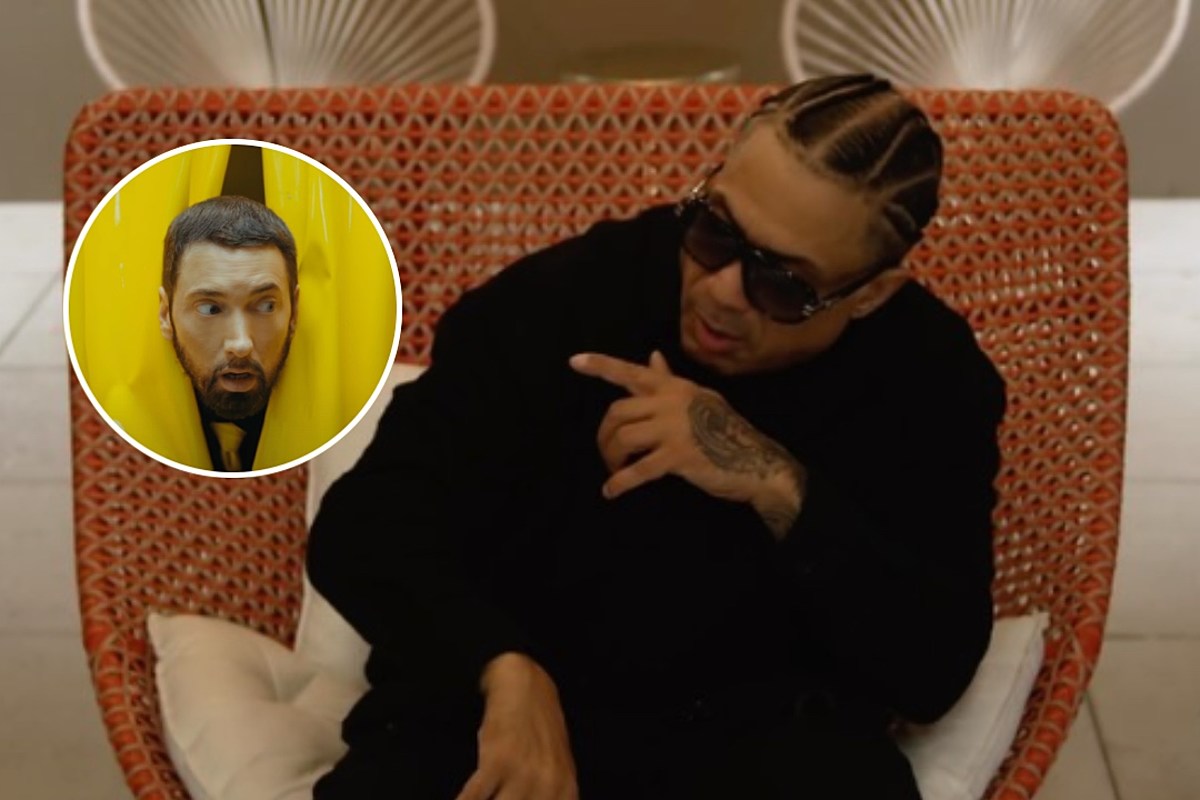
Cop Your XXL Merch NowBenzino is making a wild accusation that Eminem got plastic surgery after seeing Shady’s new video for “Doomsday Pt. 2.”Benzino Reacts to New Eminem VideoOn Wednesday (March 13), Benzino shared a post on Instagram where he reacted to Em finally dropping the visual for his latest Benzino diss, which originally came out in January. ’Zino shared a clip of the cameo-heavy visual, which can be seen below, along with the caption: “He finally responded.can someone tell me what in the plastic surgery happened to his face?? He looks like a waking corpse. Nah…this ain’t it. RAP ELVIS DESTROYED @eminem.”Read More: Benzino Takes Aim at Eminem Again by Making Fun of Em Dressed Like Britney SpearsEminem and Benzino Beef ContinuesEminem rehashed his seemingly dormant two-decade long beef with Benzino back in January with the release of “Doomsday Pt. 2,” which appeared on Lyrical Lemonade’s All Is Yellow compilation. Benzino fired back with two response tracks and claimed victory when Slim Shady didn’t respond.”I ate his a*s up. I cooked him,” Benzino said in a video shared on social media. “Back in the day, he cooked me. It’s all good. But what you Stans is not gonna do, what you Saltines ain’t gonna do, is try to come in here and be like I didn’t affect him. Stop it. Because that shows that y’all ain’t real hip-hop fans. That shows that y’all are biased and probably halfway racists.”Benzino would later cry while talking about the beef in a viral interview on the Drink Champs podcast. However, he’s continued to take shots at Em.Read More: Eminem Gives 11 Surprising Facts About the Making of “My Name Is” VideoCop Your XXL Merch NowPeep Benzino claiming Eminem got plastic surgery and check out Eminem’s “Doomsday Pt. 2” video below.See Benzino’s Post Dissing EminemWatch Eminem’s “Doomsday Pt. 2” VideoSee Wild Rap Beefs That’ll Probably Never Be ResolvedPusha-T and Drake, YG and 6ix9ine, and more.

Sexyy Red Appears to Respond to Adin Ross Claiming They Had Sex

Cop Your XXL Merch NowSexyy Red appears to respond to streamer Adin Ross recently claiming they had sex together by bringing up virginity.Sexyy Red Reacts to Adin Ross Claims?On Wednesday night (March 13), Sexyy Red seemed to react on X, formerly known as Twitter, to video of popular Kick streamer Adin Ross telling DJ Akademiks during a livestream that he had sex with the St. Louis rapper.”You paid me to take yo virginity & I did just that… next,” Sexyy Red wrote on X, along with a yawning emoji.In a follow-up post she added, “SIKE you couldn’t touch me wit ah stick.”Read More: 20 Rappers’ Most NSFW Internet Moments Over the YearsAdin Ross Tells DJ Akademiks He Slept With Sexyy RedSexyy Red’s apparent response comes after video surfaced of Adin making the claim during a livestream with DJ Ak on Wednesday.”I wan to announce something but I don’t know if I should say it,” Adin said in the clip, which can be seen below. “I did f**k Sexyy Red. It was good. It was really good. She was kinda being the dominant one.”Adin later claimed he “jerked off” to Sexyy Red’s leaked sex tape, which is what made him hit her up.Read More: Sexyy Red Explains Exactly How Her Sex Tape Got Put on Social MediaCop Your XXL Merch NowSee video of Adin Ross claiming he slept with Sexyy Red and see her apparent response below.Watch Adin Ross Insist He Had Sex With Sexyy RedSee Sexyy Red’s Response to Adin Ross Claiming They Slept TogetherSee 40 of the Raunchiest Hip-Hop Lyrics of All Time

8 Impressively Unique Mansions Rappers Own

Cop Your XXL Merch NowSome rappers own posh homes fit for the likes of MTV Cribs. But other rappers have palatial estates that would have been given prime placement on The Lifestyles of the Rich and Famous. There’s levels. While being a successful hip-hop artist can afford one to live in the lap of luxury, some rappers have gone the extra mile when it comes to picking the unique mega-mansion where they lay their heads.Pharrell’s massive Beverly Hills, Calif. estate has been jokingly dubbed a “community college” online, due to the front of the $16 million home’s mostly glass facade. The 17,000 square-foot residence also features a picturesque statue in front and long interior stairways, lending to jokes about it being a place for higher learning.Swizz Beatz and Alicia Keys’s Cali compound is a marvel of modern architecture. Called “Dreamland” by Swizz but originally named The Razor House, the Bronx, N.Y. beat maker’s eye-popping chateau is positioned on a mountainside in La Jolla, Calif. Built in 2007, Swizz’s pad, which he moved into in 2019, is rumored to be the inspiration for Tony Stark’s house in the Iron Man movies.Drake’s $100 million Toronto mansion in Bridal Path is another sight to behold. According to Architectural Digest, the design for Drizzy’s swank Toronto digs takes “cues from traditional Beaux Arts architecture, distilled and slightly abstracted to imbue the classic idiom with a more contemporary spirit.” In other words, the thing is massive. Featured is Drake’s “Toosie Slide” video, “The Embassy,” as Drake calls it, was designed by Canadian architectural and interior designer Ferris Rafauli and clocks in at a massive 50,000 square feet, which is about the same size as The White House.Cop Your XXL Merch NowCheck out photos of some impressively unique homes owned by rappers Drake, Lil Wayne, Jay-Z, Pharrell, YoungBoy Never Broke Again, Swizz Beatz, Travis Scott and Dr. Dre below.See 43 Photos of Impressively Unique Mansions Rappers Own

Kanye West, Drake’s Feud Continues to Get More Confusing

Kanye West and Drake are undoubtedly two of the biggest acts in hip-hop history. But their relationship and beef is complicated and confusing, to say the least. The former friends, now frienemies, have seemingly been at odds for the last few years, but there have also been signs that they’ve made amends. It’s become a strange cycle. With Ye recently saying “F**k Drake” in a vitriolic Instagram caption, the question remains: Is this really beef or more along the lines of Impossible Whopper?In the beginning it was all love. Drake was rapping over several Ye beats on projects early in his career. In 2009, Drake told MTV News that Ye was his biggest musical influence. “Kanye West shaped a lot of what I do, as far as music goes,” young Aubrey revealed. “Before I met him, I had the utmost respect for Kanye West. I’d even go as far as to say he’s the most influential person as far as a musician that I’d ever had in my life.”They would grow closer in the coming months. Ye directed Drake’s “Best I Ever Had” video that same year, and they both appeared on Jamie Foxx’s “Digital Girl” single that summer. Ye would also appear on Drake’s single “Forever” along with Eminem and Lil Wayne, and coproduced Drake’s 2009 single “Find Your Love,” which appeared on Drizzy’s debut album, Thank Me Later, in 2010.Watch Drake’s “Best I Ever Had” Video”What Was the First Sign Kanye West and Drake Had Beef?The first sign there were issues between the two happened in January of 2011, when Drake appeared on British DJ Tim Westwood’s radio show for an interview and seemed to take a jab at Ye and Jay-Z’s then-upcoming joint album, Watch the Throne, while talking about his own potential collab project with Lil Wayne.”I heard some other guys are coming out with an album, too,” he said. “There’s two other rappers that are coming out with an album together. I don’t know where they got that idea.”That December, Drake appeared to take another swipe at Kanye on DJ Khaled’s “I’m on One” on which he raps, “I’m just feeling like the throne is for the taking/Watch me take it.”Read More: Jay-Z and Kanye West Drop ‘Watch the Throne’ Album: Today in Hip-HopWatch Drake’s Interview With Tim WestwoodThings Between Drake and Ye Looked Good to the PublicHowever, things appeared to be kosher at least in the public eye. In the summer of 2013, Ye was a surprise guest at Drake’s OVO Festival. During his performance, he gave Drake props for putting pressure on himself and Hov. Drake later talked about the competition respect he has for Ye.But it wasn’t long before the cycle of praise and shade would rear its head again. In February of 2014, Drake called out Ye for lackluster bars on the Yeezus album during an interview with Rolling Stone. Drizzy concluded by saying he loved “everything about that guy.” Ye didn’t take the negative bait and told the crowd during a concert in New Jersey, “Tonight, it ain’t none of that. We love Drake.”The following year, Ye teased a joint album with Drake during an interview on The Breakfast Club and again performed at OVO Fest. Besides Drake boasting about having a bigger pool than Ye did on “Summer Sixteen” in 2016, there was no sign of friction. 2018, however, would be a different story.Watch Kanye West’s Interview on The Breakfast ClubKanye Tells Pusha T Drake Was Hiding a SonIn May of 2018, Pusha T released his Daytona album that contained the track “Infrared,” which finds Push calling out Drizzy for previous ghostwriting allegations. Drake returned fire on “Duppy Freestyle” before Pusha dropped the bombshell “The Story of Adidon,” on whixh Push revealed Drake was hiding a son. Drake later admitted he believes Ye told Pusha the secret info after confiding in Ye about the news he had a son. The dynamics of Ye and Drake’s relationship would forever change.Listen to Pusha T’s “The Story of Adidon”From there, the curious cycle of beef and making up would continue in a series of events. Drake took a shot at Ye on French Montana’s “No Stylist” in 2018. Ye denied he leaked the information about Drake having a son to Pusha T and apologized to Drake on Twitter. A few weeks later, the Chicago rapper-producer changed course and started dissing Drake on Instagram after speculation began circulating about if Drake was referencing Ye’s then wife Kim Kardashian as “KiKi” on the hit song “In My Feelings.”The rumor that Drake slept with Kim Kardashian was growing, and Kanye wasn’t happy about it. “People making rumors or thinking you f**king my wife and you’re not saying nothing… that don’t sit well with my spirit,” Ye wrote on Instagram.Drake would later go on LeBron James’s YouTube talk show The Shop and admit he felt betrayed by Kanye. In December of 2018, Ye shared a screenshot of a message from an alleged Drake associate asking to clear a Ye sample for “Say What’s Real.””This proves s**t faker than wrestling,” Ye captioned the post. He later shared that he had talked to Drake and things appeared to be settled. Not so fast. The following day, Ye announced that if anything happened to him, Drake should be the No. 1 suspect. Like we said, it’s complicated.Read More: Drake Appears to Diss Pusha-T on New Headie One Song “Only You Freestyle”: ListenKanye and Drake Squash Their Beef for Larry Hoover EventFast-forward to 2021. J Prince Jr. convinced Drake and Ye to squash their beef to perform together for a Free Larry Hoover Benefit concert in Chicago. The duo agreed to put their differences aside and performed at a sold-out show. Drake was even seen getting emotional while watching Ye perform “Runaway.” So, all good, right? Right?!Not so fast. The following November, Drake dropped the 21 Savage collab album Her Loss. On the track “Circo Loco,” Drizzy appeared to address how he temporarily mended his beef with Ye to perform at the Free Larry Hoover Benefit Concert. “Linking with the opps, b***h, I did that s**t for J. Prince/B***h, I did it for the Mob Ties,” Drake raps in reference to the Rap-A-Lot founder.2023 featured Drake using Kim Kardashian’s voice on his “Search and Rescue” track and also calling Ye’s apologies fake on the For All the Dogs: Scary Hours Edition track “Red Button.”Ye and Drake’s Beef ContinuesUnfortunately, this repetitive revolution continues. Ye recently said “F**k Drake” in an Instagram post that was meant to celebrate Ye and Ty Dolla $ign’s song “Carnival” going No. 1. In the writing, Ye dissed Adidas, Hailey Beiber and Drake. Ye blamed Drizzy for strategically taking Lil Durk on tour to allegedly spite Ye’s Vultures 1 rollout. Durk is featured on Ye’s lead single “Vultures.” Drake appeared to respond by using a hilarious 50 Cent viral video to address Ye.While Drake and Ye’s issues aren’t of the variety that The Notorious B.I.G. spoke of on “What’s Beef,” there has definitely been plenty of static. There’s also been a lot of love, shared associates, apologies, collaborations and general good will along the way. It’s confusing to say the least. Is there beef between the two or not? Don’t count on the zany back-and-forth between Ye and Drake to stop anytime soon.Watch the Video Drake Used to Respond to Kanye and See Ye’s Drake DissSee Unnecessary Hip-Hop Beefs That Never Should’ve Happened50 Cent vs. Fat, Meek Mill vs. Drake and more.

Study Shows 11% Of High School Seniors Use Delta 8 THC

More than one in 10 high school seniors reported recent use of products with delta 8 THC, according to the results of a study published this week. The study found that approximately 11% of 12th-grade students said that they had used delta 8 during the past year, reflecting the widespread availability of the hemp-derived cannabinoid that is sometimes referred to as “diet weed” or “light THC.”

The new research analyzed data from the Monitoring the Future survey, an ongoing study of the behaviors, attitudes and values of adolescents and young adults funded by the National Institutes of Health. The analysis showed that 11.4% of high school seniors had used delta 8 THC products in the last year. Of the 295 teens who reported using the compound, more than two-thirds (68.1%) said they had used it at least three times, while 35.4% had used it at least 10 times and nearly 17% used it at least 40 times. Nine out of 10 (91%) of delta 8 users also said that they used marijuana.

“Eleven percent is a lot of people — that’s at least one or two students in every average-sized high school class who may be using delta-8. We don’t know enough about these drugs, but we see that they are already extremely accessible to teens,” Nora Volkow, director of the National Institute on Drug Abuse, said in a statement about the research from the agency. “Cannabis use in general has been associated with negative impacts on the adolescent brain, so we must pay attention to the kinds of cannabis products teens are using, educate young people about potential risks, and ensure that treatment for cannabis use disorder and adequate mental health care is provided to those who need it.”

Delta 8 And The 2018 Farm Bill

The popularity of delta 8 THC skyrocketed after the 2018 Farm Bill legalized hemp at the federal level. Unregulated Delta 8 products were soon available at retailers including convenience stores, gas stations and smoke shops. Delta 8 products are particularly popular in states that have not legalized marijuana for recreational use, a trend that was reflected in data from the new study. About 14% of those in states without cannabis legalization reported delta 8 use, compared to 8% in states with legalization.

Dr. Adam Leventhal, executive director of the USC Institute for Addiction Science and one of the authors of the study, said that the new research illustrates how widely available delta 8 products are to young people.

“What we hadn’t known prior to this study was to what extent are these products reaching teens, which was a concern because they weren’t being comprehensively regulated,” Leventhal told CNN.

The researchers expressed concern that the widespread use of delta 8 by teenagers could lead to developmental issues or other negative effects. The long-term effects of delta 8 THC on teens are not known, although some cannabis research has shown that the drug can negatively impact memory, attention and the ability to learn in young people.

“Some of the concerns based on the underlying biology would be, of course, addiction, like what we see with marijuana, some of the neurodevelopmental changes that can happen because the adolescent brain is still forming and exposure to intoxicating substances can interfere with proper development of the brain pathways that support cognition and emotion regulation,” Leventhal said.

Jonathan Miller, the general counsel for the U.S. Hemp Roundtable, a trade group representing businesses in the hemp industry, said the results of the study were “shocking, but it’s not surprising.”

“Our hemp industry is filled with actors who provide good manufacturing practices and truth in labeling and make good efforts to keep intoxicating products out of the hands of minors, but there are unfortunately a lot of bad actors out there,” Miller said in a phone interview on Wednesday. “But the worst actor of all in this is the FDA. The FDA said when the farm bill passed in 2018 that it would take steps to start regulating hemp products and they’ve done nothing. And as a result, we’ve got a wild west.”

Miller noted that several states are taking action to regulate delta 8 THC, citing Kentucky as a state taking strong measures to keep intoxicating hemp cannabinoids out of the hands of young people. Until the FDA takes action, it will be up to states to pass rules governing hemp cannabinoids, leaving conscientious businesses with a murky regulatory environment to operate in.

Shawn Hauser, a partner at the cannabis and psychedelics law firm Vicente LLP and co-chair of the practice’s Hemp and Cannabinoids Department, said the study’s findings “illustrate the urgent need to federally legalize all cannabis (marijuana and hemp-derived products) with fundamental product safety standards governing product manufacturing, testing, labeling, marketing, etc.”

“The hemp market, which is particularly robust in states without marijuana programs, has inflamed the need for federal legalization of all cannabis products that equip state and federal regulators to appropriately protect consumer safety through regulation, enforcement, and consumer education,” Hauser wrote in an email to High Times. “Regulation is more effective than prohibition in keeping cannabis out of the hands of children.”

Hawaii Lawmakers Amend Automatic MJ Expungement Bill to Single-County Pilot Program

Hawaii lawmakers are pressing ahead with an updated cannabis legalization plan, and while the Aloha State could very well be one of the next to embrace adult-use reform, the original plan is already seeing some substantial shifts. Namely, it appears that the Senate is looking to significantly scale back some of the actions surrounding social equity.

The original measure, passed by the House last week, would have automatically expunged tens of thousands of arrest and conviction records for low-level cannabis convictions in the state. On Tuesday, a Hawaiian Senate panel has instead amended the proposal to a single-county pilot program, first reported by Marijuana Moment.

Limiting the Scope of Cannabis Expungements in Hawaii

Similar to the recreational legalization plan, which state lawmakers are separately working to advance, this move is based on plans from Hawaii Attorney General Anne Lopez. 

“Instead of the bill’s statewide automatic expungement program for arrests and convictions,” said Sen. Karl Rhodes (D), chair of the Senate Judiciary Committee. “I propose that we adopt the attorney general’s pilot program for state-initiated expungement of marijuana possession arrests.”

The measure would also only apply to criminal cases “terminated with a final disposition other than a conviction,” 

Back in November 2023, Lopez released her own legalization plan, which the most recent legislation passed by the Senate primarily pulls from. While many lawmakers have praised the new bill and the plan it’s based upon, advocates have expressed concern around the bill’s creation of additional law enforcement protocols.

Among other provisions, the legislation proposes a THC blood limit for drivers (even though THC metabolites can be detected in the body days or even weeks after consumption), the creation of a cannabis enforcement unit within the Department of Law Enforcement and adds eight positions in a drug nuisance abatement unit in the AG’s office.

Rhodes suggested that the pilot program could be located in Hawaii County, the states’ second most populous county, comprising the Big Island and hosting about 14% of the state’s total population.

According to bill sponsor Rep. David Tarnas (D), the original legislation would have made approximately 30,000 people eligible for expungements. Though, if the amendments from the AG’s office remain in place, HB 1595’s ultimate impact would be far smaller. 

Influence from the Attorney General’s Office

Lopez’s office issued a statement saying that, without these amendments, the department “reiterates its strong opposition to this bill.”

“Instead of the bill in its current form, the Department proposes a pilot project whereby certain individuals who have been arrested solely for marijuana possession…and whose arrest resulted in a non-conviction disposition, have the arrest expunged via a state-initiated process,” the department said in a statement.

It continues, arguing that limiting the expungement process to one county would keep the case load manageable using its existing resources and suggested an approximate 14-month duration for the program.

“Results of the pilot project could then be used to evaluate the project’s effectiveness, utility, and efficiency, and to allow the Data Center to make more informed recommendations for future efforts,” the department said.

Hawaii has already introduced cannabis decriminalization, in turn ushering in a record sealing process from the courts, though advocates attest that the process isn’t accessible and can be challenging to navigate. 

Mixed Reception as Hawaii Presses Forward With Potential Reform

The original bill would have automated the process, ensuring that the attorney general’s office “issue, without petition and on the department’s own initiative, an expungement order annulling, canceling, and rescinding all criminal records, including records of arrest and any records of conviction” for crimes of possessing up to three grams of cannabis. The process would have included records for civil violations, petty misdemeanor convictions, juvenile convictions, arrests and convictions, along with any pending charges.

The prior version would have also required the Hawaii Criminal Justice Data Center to identify all eligible cases within 30 days of the bill’s enactment, providing that information in biennial reports to the attorney general’s office, county prosecuting attorneys, county police departments and each state court. 

After receiving those lists, the attorney general’s office would have 60 days to issue expungement orders for the records under the previous version. Within one year of receiving those orders, the judiciary would finish the job.

Some advocates emphasized that the passing of an expungement process in the state was monumental despite the narrower scope.

“This is a huge step forward that will encourage Gov. Green to amplify relief for those with cannabis records through his clemency powers, something the Hawai’i legislature has already urged him to do,” said Frank Stiefel, senior policy associate for the Last Prisoner Project.

Others like Karen O’Keefe, director of state policies for Marijuana Policy Project, said that the changes “represent a severe blow to cannabis justice.”

“An economic life sentence is an outrageously disproportionate penalty for possessing a substance that most Hawaii residents—and the Hawai’i Senate—believe should be legal,” O’Keefe told Marijuana Moment. “Testimony at the House Judiciary Committee’s informational briefing made it clear Hawai’i can and should remove this stigma which derails so many lives.”

The changes to HB 1595 come fresh off the Senate’s passing of SB 3335, which would allow adults over the age of 21 to possess up to an ounce of cannabis and up to five grams of cannabis concentrates, along with establishing a recreational cannabis sales framework. 

That bill now heads to the state’s more conservative House for consideration, which has historically been resistant to adult-use cannabis policies.

Massachusetts Governor Announces Plan To Pardon Cannabis Misdemeanors

Calling it a “nation-leading effort,” Massachusetts Gov. Maura T. Healey on Wednesday announced her intention to take executive action to pardon misdemeanor marijuana possession convictions in the commonwealth. 

If it is approved by the “Governor’s Council,” Healey’s office said it “would be the most comprehensive action by a governor since President Joe Biden pardoned federal marijuana possession convictions and called on governors to take similar actions in their states,” and “could impact hundreds of thousands of people.”

Per the official state website, the Massachhuestts Governor’s Council is “composed of eight individuals elected from districts, and the Lieutenant Governor who serves ex officio,” and it “provides advice and consent on gubernatorial appointments, pardons and commutations, and warrants for the state treasury.”

The governor’s office said that, if approved, the pardon “will apply to all eligible convictions, and most people will not need to take any action to have their criminal records updated,” as well as “to all adult Massachusetts state court misdemeanor convictions before March 13, 2024 for possession of marijuana (sometimes referred to as possession of a “Class D substance”).”

“Nobody should face barriers to getting a job, housing or an education because of an old misdemeanor marijuana conviction that they would not be charged for today,” Healey, a Democrat who is serving her first term after being elected in 2022, said in a statement on Tuesday. “We’re taking this nation-leading action as part of our commitment to using the clemency process to advance fairness and equity in our criminal justice system. We’re grateful for President Biden’s leadership on this at the federal level and proud to answer his call to take action in the states.” 

Other top state officials in Massachusetts, including Lieutenant Governor Kim Driscoll, hailed the announcement of the pardon.

“Marijuana laws have significantly changed over the past decade, and it’s essential that our criminal justice system adjusts with them. Governor Healey’s proposed pardon represents an important step toward righting historic wrongs, particularly around our country’s misguided War on Drugs,” said Driscoll. “We thank the Governor’s Council for their careful consideration of this recommendation and look forward to continuing our progress to make Massachusetts a more fair and equitable home for all.” 

Massachusetts Attorney General Andrea Joy Campbell applauded the “Healey-Driscoll administration’s efforts to rectify historic racial disparities, including with this proposed pardon, and President Biden’s leadership at the federal level on the same issue.”

“Convictions for simple marijuana possession – which someone could not be charged with today – have led to the disproportionate incarceration of Black and brown people and made it nearly impossible for them to obtain a job, housing, educational opportunities and more. As the AG’s Office also works to address injustice and close the racial wealth gap, this proposed pardon meaningfully moves the Commonwealth in the right direction,” the attorney general said.

Democratic House Speaker Ronald J. Mariano, meanwhile, said the “decision from Governor Healey to pardon certain marijuana convictions is the right one, as it is another step towards rectifying decades of injustices stemming from the criminalization of cannabis.”

“This announcement is consistent with the Legislature’s intent during the passage of the 2018 criminal justice reform law, which was updated in 2022 when the Legislature passed further cannabis reforms, that allowed residents to seek expungements for convictions that are no longer crimes following voter-approved reforms,” Mariano said. 

As the statements from Healey and other officials referenced, the pardon takes a cue from President Biden, who in the fall of 2022 issued a pardon to thousands of Americans who were convicted of violating federal cannabis laws.

“Sending people to prison for possessing marijuana has upended too many lives and incarcerated people for conduct that many states no longer prohibit,” Biden said in a statement then. “Criminal records for marijuana possession have also imposed needless barriers to employment, housing, and educational opportunities. And while white and Black and brown people use marijuana at similar rates, Black and brown people have been arrested, prosecuted, and convicted at disproportionate rates.”

At the time, the president also urged governors to take their own action to clear the records of such individuals at the state level.

“In October 2022, President Biden issued a presidential proclamation that pardoned many federal and D.C. offenses for simple marijuana possession offenses. In December 2023, the President expanded that pardon to include more offenses He also issued a call to Governors to take action to pardon marijuana convictions in their states and, in the State of the Union last week, the President directed his Cabinet to review the federal classification of marijuana,” Healey’s office explained. “Governor Healey has already taken historic action on pardons. She became the first Massachusetts Governor in decades to recommend pardons in her first year in office. She has pardoned a total of 13 people to date. She also issued new clemency guidelines to center fairness and equity in the criminal justice system.”

Minnesota To Crack Down on Illegal Flower Sales, Including Full-Strength Hemp

Minnesota’s Office of Cannabis Management (OCM) announced Tuesday that it will begin to crack down on the illegal sales of cannabis flower across Minnesota as the state’s adult-use market takes form. The Star-Tribune reports that the OCM entered into an agreement with the Minnesota Department of Health (MDH) to add inspection capacity for illegal sales of cannabis flower.

Minnesota is the 23rd state in the nation to legalize adult-use cannabis for people 21 and older. In doing so, the state also legalized the sale of hemp-derived cannabinoid consumer products, a unique provision, but selling raw cannabis flower is currently illegal because OCM has not yet issued any cannabis business licenses, and hemp sellers must also be licensed. 

When Minnesota legalized adult-use cannabis, the Minnesota Legislature included statutory provisions, Minnesota Statutes, chapter 152.0264, making the sale of cannabis illegal until a business is licensed by OCM.

As seen in many other states, many retailers have taken advantage of the legal loopholes regarding hemp derivatives, but the state is pushing back against unlicensed businesses. Just a week ago, on March 7, the OCM issued an enforcement notice designed to warn retailers about selling full-strength hemp products. The OCM stated that it has received complaints of retailers selling full-strength cannabis flower under the guise of being hemp. Hemp is legal only within THC limits specified by state and federal law.

The OCM, in alignment with federal law regarding hemp under 7 CFR 990.1, will consider the total concentration of THC post-decarboxylation—the process that converts THCA to delta-9 THC to produce an intoxicating effect. The examination of raw flower products will include reviewing the certificate of analysis.

Minnesota Statutes, Chapter 342 defines Minnesota’s cannabis market, empowering the OCM to ensure compliance. Minnesota Statutes, chapter 342.09, subdivision 4 prohibits the retail sale of cannabis flower and cannabis products “without a license issued under this chapter that authorizes the sale.”

A Warning to Flower Sellers in Minnesota

The OCM reiterated its stance on flower that is being sold by retailers without a license.

“Our primary goal at the Office of Cannabis Management is to ensure a safe, legal cannabis industry that protects public health and provides accurate, reliable information to adult consumers,” said Charlene Briner, OCM interim director. “This interagency agreement gives us capacity to conduct inspections during this transitional implementation period, and more fully integrates the work of the MDH inspectors who will eventually transition their work to OCM.”

MDH inspectors who inspect retailers selling legal hemp-derived cannabinoid products will begin simultaneous examination of w flower products being offered for sale to ensure those products are hemp and not cannabis.

“While this is a temporary issue that will no longer exist once businesses are licensed to sell cannabis flower, OCM’s commitment to ensuring an industry that abides by all legal requirements is steadfast and ongoing,” said Briner. “We are confident that by providing clear expectations and guidance to businesses, the majority of operators will choose to follow the law.”

The crackdown of raw flower products will mean that inspectors will look for the product’s certificate of analysis for test results on total THC. Per federal law and under the 2018 Farm Bill, hemp flower must contain 0.3% or less of delta-9 THC on a dry weight basis. Products exceeding 0.3% delta-9 THC in dry weight are considered marijuana and are therefore illegal to sell.

Penalties for Selling Flower Illegally

So what are the penalties involved for sellers of illegal flower? Retailers caught selling flower and who are in violation of the law could be faced with embargo of product and fines of up to $1 million for violating state law. Additionally, a violation could impact a person’s ability to receive a license for a cannabis business in the future. 

Per Minnesota Statutes, 342.09, subdivision 6, OCM may assess fines in excess of $1 million for violations of this law. Likewise, under Minnesota Statutes, chapter 342.19, OCM is empowered to embargo any product that it has “probable cause to believe . . . is being distributed in violation of this chapter or rules adopted under this chapter[.]”

The OCM encourages retailers to vet products that they are selling to ensure that the products are legal. The OCM has sent a letter to all retailers registered with MDH to alert them that inspections of raw flower will begin immediately.

In a December 2023 bulletin, Minnesota’s health department issued a similar warning, noting that the agency inspected 167 retailers offering hemp-derived cannabinoid products between August and November and found that more than one in three (39%) of the shops were selling illegal high-potency products. Under Minnesota law, hemp edibles and beverages sold in the state must not exceed 5 milligrams of THC per serving and no more than 50 milligrams per package.

Licensing for cannabis retailers is expected to roll out later this year, and state officials aim to launch cannabis sales in 2025.

Arizona AG Says Hemp-Synthesized Intoxicants Can’t Be Sold at Non-Dispensaries

Arizona Attorney General Kris Mayes recently issued a formal legal opinion on March 11, which addressed a question sent by Sen. Steve Montenegro and Sen. T.J. Shope, which inquired if selling delta-8 THC products (which also covers delta-10 products and any other “hemp-synthesized intoxicants”) at smoke shops or convenience stores violates state law.

Mayes’ summary answer immediately responds to the presented question. “No, Arizona law does not permit the sale of delta-8 and other hemp-synthesized intoxicants by entities that have not been licensed by Health Services,” Mayes wrote. “Irrespective of delta-8’s arguable federal legality under the 2018 Agriculture Improvement Act (“Farm Bill”), Arizona continues to define and regulate “industrial hemp” in a manner that precludes the sale of hemp-synthesized intoxicants in convenience stores, smoke shops, and other unlicensed locales.”

The opinion sets up an analysis supported with background history of cannabis in Arizona, starting with medical cannabis legalization in 2010, the effects of the 2018 Farm Bill, the state’s legalization of industrial hemp for some purposes (also in 2018), and the following surge in delta-8 THC products.

Mayes also utilizes Food and Drug Administration (FDA) concerns about unregulated delta-8 THC. The FDA previously said that “[s]ome manufacturers may use potentially unsafe household chemicals to make delta-8 THC through this chemical synthesis process,” and “[t]he final delta-8 THC product may have potentially harmful by-products (contaminants) due to the chemicals used in the process.” Further accounts claim unsanitary settings where products are processed, calling it a “’quite a soup’ of by-products and other unwanted compounds.” Also, Mayes includes that the FDA has received 104 reports regarding adverse effects of delta-8 THC product consumption between December 2020-February 2022, as well as 2,362 “exposure cases” involving delta-8.

Following this, Mayes begins the analysis portion of the legal opinion. “You have asked this Office to examine whether entities that do not possess a license to sell cannabis products by Health Services can lawfully sell products containing delta-8 THC or similar hemp-synthesized intoxicants,” Mayes wrote. “The answer to that question depends on whether products containing hemp-synthesized intoxicants constitute ‘controlled substances’ and/or ‘industrial hemp’ under Arizona law. As explained below, we conclude that state law prevents entities not appropriately licensed by Health Services from selling products containing hemp-synthesized intoxicants like delta-8 THC.”

Mayes cites that delta-8 THC products are listed as a controlled substance in Arizona, and that the state’s industrial hemp program “does not exempt hemp-synthesized intoxicants from Health Services’ regulation.”

State law defines cannabis as “all parts of any plant of the genus cannabis whether growing or not, and the seeds of such plant.” Mayes included a 2019 court case, State v. Jones, in which the Supreme Court ruled on whether the state definition of cannabis also applies to hashish or cannabis extracts, to determine if medical cannabis patients are protected if they use extracts instead of dried cannabis flower. “‘All parts’ refers to all constituent elements of the marijuana plant, and the fact the resin must first be extracted from the plant reflects that it is part of the plant,” the ruling stated.

However, Mayes explained that this case does not apply to delta-8. “Jones’ plain import is that because [Arizona Medical Marijuana Act] legalized marijuana—an intoxicating substance—for certain purposes, it must be understood to have legalized a materially similar intoxicating extract of marijuana. Nothing in the case’s holding or reasoning supports its extension to the synthesis of an intoxicating product from a non-intoxicating product.”

Finally, the opinion ends with a final point that although the industrial hemp law was incorporated into federal law, it does not legalize delta-8 THC products.

Mayes concludes her opinion and reiterates that delta-8 THC products, as well as other hemp-synthesized intoxicants, can’t legally be sold by unlicensed sellers. “Arizona’s 2018 industrial hemp law did not create an exception to these laws,” she wrote. “Rather, in contrast to the federal Farm Bill, the industrial hemp law omitted hemp ‘extracts’ and ‘derivatives’ from the definition of industrial hemp and expressly provided that the State wished to ‘maintain strict control of marijuana.’ Delta-8’s sale by unlicensed entities like convenience stores and smoke shops is therefore unlawful.”

The Arizona Mirror spoke with Jonathan Udell, Arizona NORML communications director, about Mayes’ legal opinion, stating that she is giving the state’s cannabis industry a monopoly. “This is Attorney General Mayes giving the marijuana industry something that the legislature would not,” Udell said. “It’s a disappointing outcome.”

Udell provided an example, explaining that the Arizona Dispensaries Association (ADA) has introduced legislation in the past to regulate hemp-derived THC products by banning sales of such products or making it legal to sell them only at licensed dispensaries. According to a campaign finance report obtained by the Arizona Mirror, the ADA provided $40,000 to a political committee that spent approximately $367,000 in order to assist Mayes in getting elected to her position.

ADA executive director, Ann Torez, sent a statement to the news outlet, approving of Mayes’ opinion. “We believe it reflects the intent of Arizona’s voters and most importantly is in the best interest of public health and safety,” Torez said.

Additionally, the Arizona Mirror spoke with Phoenix-based attorney Tom Dean, who claims that Mayes’ legal opinion is very similar to a rebuttal of a legal analysis that he provided last year. “It’s just yet another example of what I think is a wrongheaded approach to marijuana policy in general,” Dean said. He added that Mayes’ opinion isn’t legally binding, and a lawsuit would be necessary in order to pursue a legal conclusion to the argument.